
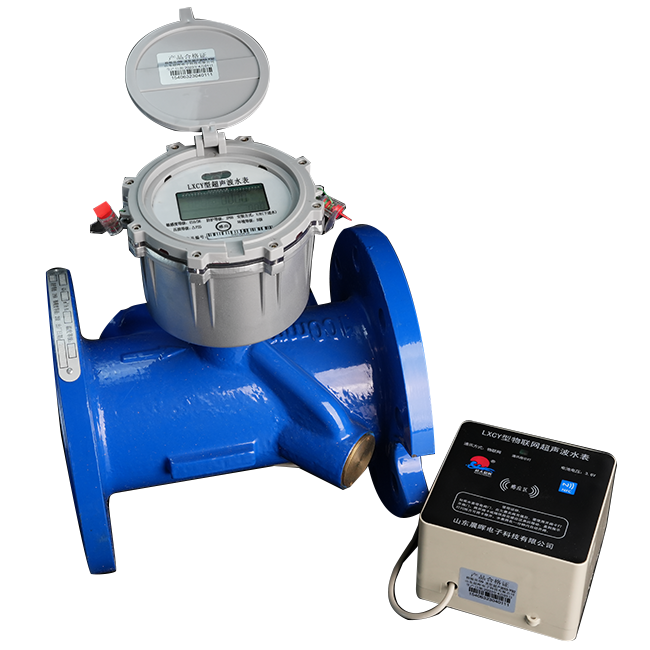
LXCY Internet of Things Ultrasonic Water Meter
  • LXCY Internet of Things Ultrasonic Water Meter
Back to list
LXCY Internet of Things Ultrasonic Water Meter

Small Diameter: DN15 ~ DN25

Large Diameter: DN32 ~ DN300

Design Standards:

CJT 434-2013 Ultrasonic Water Meters

JJG 162-2019 Verification Procedures for Cold Water Meters for Drinking Water, applicable to Mechanical Water Meters, Electromagnetic Water Meters, and Ultrasonic Water Meters

GBT 778-2018 Cold and Hot Water Meters for Drinking Water

JJG 162-2019 Verification Procedures for Cold Water Meters for Drinking Water, applicable to Mechanical Water Meters, Electromagnetic Water Meters, and Ultrasonic Water Meters

Materials:

Small Diameter: Copper

Large Diameter: Cast Iron, Carbon Steel

Size Range:
Product description
The LXCY-type Internet of Things (IoT) ultrasonic valve-controlled water meter is a new type of water meter. It detects the time difference generated due to the change in the speed of the ultrasonic beam when it propagates downstream and upstream in water. By analyzing and processing this time difference, it can obtain the water flow velocity and further calculate the water flow rate. Then, it transmits data such as the water volume to the server through the NB-IoT (Narrow Band Internet of Things) for centralized management. It has the following characteristics: a low starting flow velocity, a wide range ratio, high measurement accuracy, stable operation, no moving parts or flow-blocking components inside, being unaffected by impurities in the water, a long service life, the ability to transmit data without the need to lay cables, collectors and other equipment, and it can be used immediately after installation.
Customer challenge
Data Collection and Transmission
Traditional water meters can only collect data in one direction, unable to perform real-time monitoring or remote management.
Maintenance and Management Costs
Traditional water meters require manual on-site readings and regular maintenance, resulting in higher management costs.
Installation Requirements
Mechanical water meters have strict requirements for the length of the straight pipe section and installation direction, while ultrasonic water meters can be installed at various angles and have lower requirements for straight pipe sections.
Product function
Abnormal Detection and Alarm
Meter Reading Function
Voltage Detection Function
NFC Function
The meter features abnormal detection, recording, and alarm display functions when anomalies occur, such as ultrasonic transducer malfunction, non-full pipe (empty pipe) conditions, or low temperatures. It can record the date and valid data at the time of the anomaly.
It can report the metering data and status data in real-time based on remote transmission commands.
The meter has a voltage detection function that records low voltage status when the battery is running low. It displays a low voltage warning on the LCD screen and triggers an alarm.
Through a mobile app, users can set parameters for the water meter, including turning the NFC valve on or off, modifying the meter’s working mode, uploading time intervals, communication retry count, available water volume, and more. It also allows reading data from the meter, including accumulated consumption, abnormal alarm status, current voltage, and other information.
Value advantage
  • Usage Range
    Usage Range
    The ultrasonic water meter is not affected by water quality, with strong adaptability, and can operate stably under various water quality conditions.
  • Maintenance Costs
    Maintenance Costs
    Ultrasonic water meters require minimal maintenance and do not need frequent replacement of components, making them relatively low-cost to maintain.
  • Flow Monitoring
    Flow Monitoring
    The ultrasonic water meter can accurately detect leaks and reverse flow using ultrasonic technology, improving water safety and management efficiency.
  • Precise Measurement
    Precise Measurement
    The use of ultrasonic measurement technology, with no mechanical moving parts, makes the water meter durable, highly accurate, and capable of measuring even small flow rates, allowing for precise drop-by-drop measurement.
Application scenario
Water supply network reconstruction
Rural drinking water
Urban water use
Urban water use
Relevant data
All resources
Technical parameters
Certification information
File name File Size Operation
CNAS Certification 2.79M
LXCY Internet of Things Ultrasonic Water Meter 1.53M
File name File Size Operation
LXCY Internet of Things Ultrasonic Water Meter 1.53M
File name File Size Operation
CNAS Certification 2.79M
Consulting
Services
Please enter
  • China
  • Albania
  • Algeria
  • Afghanistan
  • Argentina
  • United Arab Emirates
  • Aruba
  • Oman
  • Azerbaijan
  • Egypt
  • Ethiopia
  • Ireland
  • Estonia
  • Andorra
  • Angola
  • Antigua and Barbuda
  • Austria
  • Australia
  • Macau, China
  • Barbados
  • Papua New Guinea
  • Bahamas
  • Pakistan
  • Paraguay
  • Palestine
  • Bahrain
  • Panama
  • Brazil
  • Belarus
  • Bulgaria
  • Benin
  • Belgium
  • Iceland
  • Bolivia
  • Puerto Rico
  • Bosnia and Herzegovina
  • Poland
  • Botswana
  • Belize
  • Bhutan
  • Burkina Faso
  • Burundi
  • North Korea
  • Equatorial Guinea
  • Denmark
  • Germany
  • Timor-Leste
  • Togo
  • Dominican Republic
  • Dominica
  • Russia
  • Ecuador
  • Eritrea
  • France
  • Faroe Islands
  • French Polynesia
  • Philippines
  • Finland
  • Cape Verde
  • Gambia
  • Congo
  • Colombia
  • Costa Rica
  • Grenada
  • Georgia
  • Cuba
  • Guadeloupe
  • Guyana
  • Kazakhstan
  • Haiti
  • South Korea
  • Netherlands
  • Montenegro
  • Honduras
  • Kiribati
  • Djibouti
  • Kyrgyzstan
  • Guinea
  • Guinea-Bissau
  • Canada
  • Ghana
  • Gabon
  • Cambodia
  • Czech Republic
  • Zimbabwe
  • Cameroon
  • Qatar
  • Cayman Islands
  • Comoros
  • Kosovo
  • Ivory Coast
  • Kuwait
  • Croatia
  • Kenya
  • Cook Islands
  • Latvia
  • Lesotho
  • Laos
  • Lebanon
  • Liberia
  • Libya
  • Lithuania
  • Liechtenstein
  • Réunion
  • Luxembourg
  • Rwanda
  • Romania
  • Madagascar
  • Malta
  • Maldives
  • Malawi
  • Malaysia
  • Mali
  • North Macedonia
  • Marshall Islands
  • Mauritius
  • Mauritania
  • United States
  • Mongolia
  • Montserrat
  • Bangladesh
  • Peru
  • Micronesia
  • Myanmar
  • Moldova
  • Morocco
  • Monaco
  • Mozambique
  • Mexico
  • Namibia
  • South Africa
  • South Sudan
  • Nepal
  • Nicaragua
  • Niger
  • Nigeria
  • Norway
  • Norfolk Island
  • Palau
  • Portugal
  • Japan
  • Sweden
  • Switzerland
  • El Salvador
  • Samoa
  • Serbia
  • Sierra Leone
  • Senegal
  • Cyprus
  • Seychelles
  • Saudi Arabia
  • Sao Tome and Principe
  • Saint Kitts and Nevis
  • Saint Lucia
  • San Marino
  • Saint Vincent
  • Sri Lanka
  • Slovakia
  • Slovenia
  • Eswatini
  • Sudan
  • Suriname
  • Somalia
  • Solomon Islands
  • Tajikistan
  • Taiwan, China
  • Thailand
  • Tanzania
  • Tonga
  • Turks and Caicos Islands
  • Trinidad and Tobago
  • Tunisia
  • Tuvalu
  • Turkey
  • Turkmenistan
  • Wallis and Futuna
  • Vanuatu
  • Guatemala
  • Venezuela
  • Brunei
  • Uganda
  • Ukraine
  • Uruguay
  • Uzbekistan
  • Spain
  • Western Sahara
  • Sikkim
  • Greece
  • Hong Kong, China
  • Singapore
  • New Caledonia
  • New Zealand
  • Hungary
  • Syria
  • Jamaica
  • Armenia
  • Yemen
  • Iraq
  • Iran
  • Israel
  • Italy
  • India
  • Indonesia
  • United Kingdom
  • British Virgin Islands
  • Jordan
  • Vietnam
  • Zambia
  • Chad
  • Gibraltar
  • Chile
  • Central African Republic
  • China
  • Nauru
  • Vatican City
  • Fiji
Please enter
  • Water Service
  • Thermal field
  • Municipal Corporation
  • Gas field
  • Real estate projects
  • Government public construction projects
  • Construction of Factory building
  • Fire protection field
  • Mining field
  • Chemical field
  • Casting field
  • In the field of mechanical engineering
  • electrical/power field
  • water conservancy field
  • logistics park
  • thermoelectric field